
Temples

i2
Temples

ISKCON Temple Aligarh

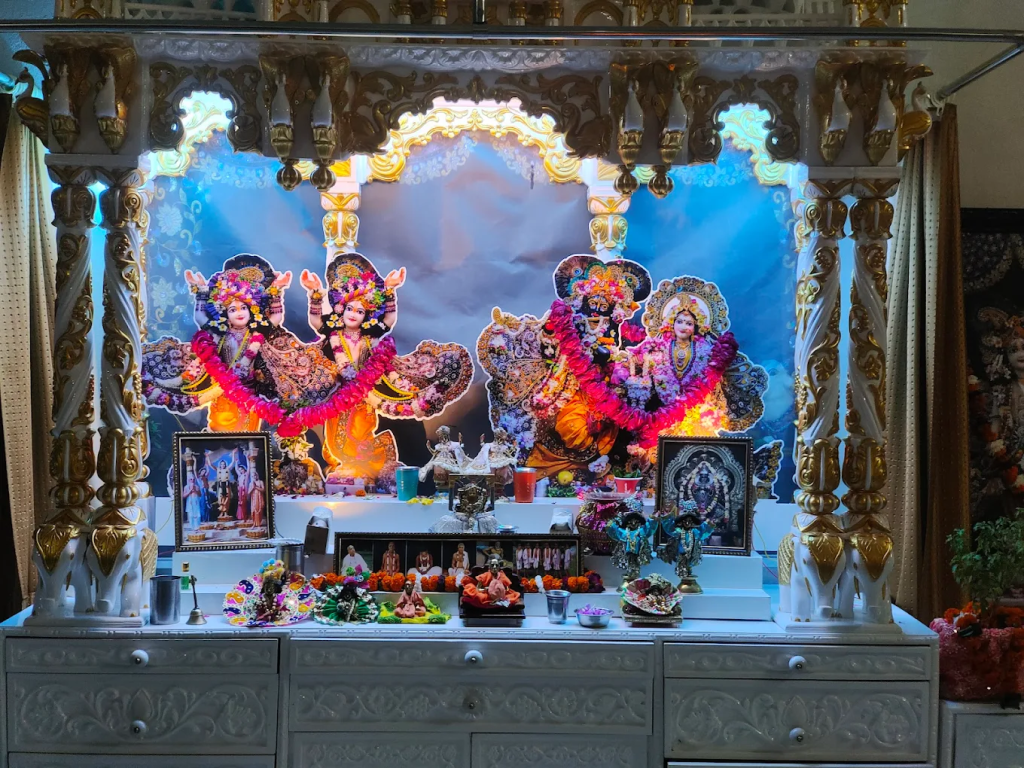
The ISKCON Temple Aligarh is a spiritual and cultural landmark of the International Society for Krishna Consciousness (ISKCON), located in Aligarh, Uttar Pradesh, India. Dedicated to Lord Krishna, the temple serves as a hub for Vaishnava worship, devotional music, and community service in the region. Key facts Architecture and Layout The temple showcases traditional North Indian temple architecture with domed shikharas and intricately carved motifs. The main sanctum houses the deities of Sri Sri Radha and Krishna, surrounded by bright murals depicting scenes from the Bhagavad Gita and the life of Krishna. The temple complex includes prayer halls, guest facilities, and a prasad distribution area. Religious and Cultural Activities ISKCON Aligarh conducts regular bhakti-yoga sessions, kirtans (devotional singing), and classes on the Bhagavad Gita. Major festivals such as Janmashtami and Ratha Yatra draw large crowds, featuring devotional processions and cultural programs. The temple also organizes youth outreach and food donation drives under the “Food for Life” initiative. Community Role Beyond worship, the temple acts as a community center promoting spiritual education and social welfare. It attracts devotees, students, and visitors seeking a serene environment for meditation and cultural engagement. The temple’s charitable work, particularly in providing meals to the needy, has made it an integral part of Aligarh’s social landscape.
k2
Temples

Khereshwar Temple

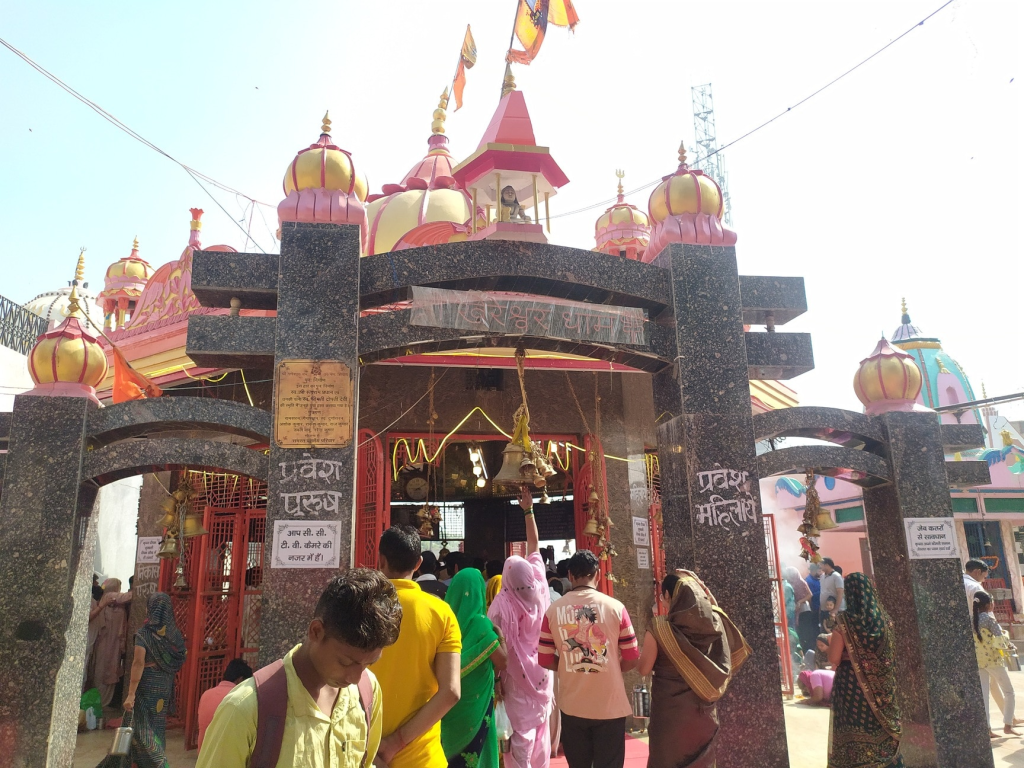
Khereshwar Temple is a revered Hindu shrine located near Aligarh, Uttar Pradesh, India. Dedicated to Lord Shiva, it is locally known as the Khereshwar Mahadev Temple and is a significant site for devotees, particularly during the holy month of Shravan. Key facts Religious significance The temple holds deep spiritual importance for followers of Lord Shiva. Pilgrims visit throughout the year, with peak attendance during Shravan and on Maha Shivaratri. Local tradition considers the temple a powerful place for blessings and fulfillment of vows, contributing to its prominence in regional devotion. Architecture and surroundings The temple features classic North Indian architecture, with a prominent shikhara (spire) and sanctum housing a Shiva linga. The site is set amid a serene landscape, enhancing its atmosphere of devotion and tranquility. Surrounding areas often host fairs and gatherings during religious festivals, drawing both locals and visitors. Cultural and local role Khereshwar Temple serves as a focal point for community worship and local cultural events. Its presence reinforces Aligarh’s spiritual heritage, connecting contemporary worship practices with long-standing Shaivite traditions of the region.

s1
Temples

Achal Taal Temple

Achal Taal Temple is a historic lakeside temple complex in Aligarh, Uttar Pradesh, centered around the Achal Sarovar (Achal Taal) and the prominent Hanuman shrine often called Gilahraj Ji Hanuman Mandir. It is both a local pilgrimage site and a symbolic heritage landmark linked in legend to the Mahabharata period. Key facts Background and legends Local tradition connects Achal Taal to the Mahabharata, saying the Pandava brothers Nakul and Sahadev bathed in this pond during their exile and worshipped here, giving the site ancient sanctity. Over time, temples multiplied around the sarovar, turning it into a compact pilgrimage circuit for residents of Aligarh and nearby regions. Gilahraj Ji Hanuman Mandir Within the Achal Taal area, the best-known shrine is Gilahraj (or Gilharaj) Ji Hanuman Mandir. The presiding form of Hanuman is uniquely associated with a “squirrel-like” aspect, tied to Nath-sect saints and local visionary legends about the discovery of the idol in a mound of earth. This distinctive iconography makes the temple notable among Hanuman shrines in India. Present-day temple complex and visits The Achal Taal Temple area now includes multiple small shrines, ghats around the pond, and active Hanuman worship with peak crowds on Tuesdays, Saturdays, and Hanuman Jayanti. Visitors come for darshan, circumambulation of the sarovar, and seasonal fairs; many locals regard the deity as a protective guardian for Aligarh city.