
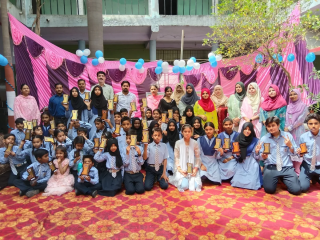
Aligarh city public school
City School Aligarh is a private educational institution located in Aligarh, Uttar Pradesh, India. It provides co-educational learning from pre-primary through senior secondary levels and is known for combining academic rigor with value-based education. The school serves as one of Aligarh’s notable English-medium schools emphasizing holistic student development. Key facts Location: Aligarh, Uttar Pradesh, India Affiliation: Central Board of Secondary Education (CBSE) Type: Private, co-educational school Grades: Nursery to Class XII Medium of instruction: English Academic approach City School Aligarh follows the CBSE curriculum, integrating modern teaching methodologies with traditional educational values. The school emphasizes conceptual understanding, problem-solving skills, and continuous assessment. Co-curricular programs are designed to develop leadership, communication, and teamwork among students. Facilities and campus The campus typically includes well-equipped science and computer laboratories, a library, sports grounds, and digital learning infrastructure. Facilities are intended to foster both academic and extracurricular excellence in a safe environment. Community and activities The school organizes annual events such as sports meets, cultural programs, and science exhibitions that encourage creativity and social responsibility. It also promotes environmental awareness and community engagement through student-led initiatives and outreach programs. Recognition and impact City School Aligarh has established a reputation within the region for strong board examination results and disciplined academic culture. Alumni often pursue higher education in prominent Indian universities, reflecting the school’s consistent academic quality and emphasis on moral education.

Delhi Public School
Delhi Public School Aligarh is a co-educational, English-medium school located in Aligarh, Uttar Pradesh, India. It operates under the Delhi Public School Society, one of India’s largest and most reputed networks of private schools, and offers education from the pre-primary to senior secondary levels. Key facts Affiliation: Central Board of Secondary Education (CBSE) Established: 1998 Managing body: Delhi Public School Society, New Delhi Campus location: Anupshehar Road, Aligarh, Uttar Pradesh Motto: “Service Before Self” Academics and Curriculum The school follows the CBSE curriculum, emphasizing a balanced blend of academics, co-curricular activities, and life-skill education. Core subjects include languages, sciences, social studies, and mathematics, while senior students can choose specialized streams such as Science, Commerce, or Humanities. DPS Aligarh also integrates technology-enabled learning through smart classrooms and laboratory facilities. Infrastructure and Facilities 5 The school’s campus is equipped with modern amenities, including science and computer laboratories, libraries, sports complexes, art and music rooms, and an auditorium for cultural programs. It provides transport and cafeteria services to ensure a convenient learning environment. Co-curricular and Student Life DPS Aligarh encourages holistic development through sports, performing arts, debates, and community outreach. Students regularly participate in inter-school competitions and social initiatives aligned with the DPS Society’s ethos of character building and civic responsibility. Administration and Affiliation The school functions under the supervision of the DPS Society and maintains academic and operational standards consistent with other DPS institutions across India. It aims to foster global citizenship values while maintaining strong academic performance at the CBSE board level.

Jawaharlal Nehru Medical College (JNMC)
Jawaharlal Nehru Medical College (JNMC) is a public medical school and teaching hospital in Aligarh, Uttar Pradesh, India. Established in 1962, it is part of Aligarh Muslim University and is known for its contributions to medical education, research, and healthcare in North India. Key facts Founded: 1962 Affiliation: Aligarh Muslim University Location: Aligarh, Uttar Pradesh, India Courses: MBBS, MD/MS, DM/MCh, PhD Teaching hospital: JNMC Hospital with ~1,500 beds History and establishment The college was founded during the tenure of AMU Vice-Chancellor Col. Bashir Husain Zaidi and named after India’s first Prime Minister, Jawaharlal Nehru. It began with a modest setup that has grown into one of India’s prominent government-run medical institutions. Its establishment aimed to improve healthcare access and medical education in the region. Academics and training JNMC offers undergraduate (MBBS) and postgraduate (MD/MS) programs, along with super-specialty and doctoral degrees. It admits students through the National Eligibility cum Entrance Test. Training integrates classroom instruction with extensive clinical exposure at its attached teaching hospital, emphasizing both patient care and community health. Research and facilities The institution conducts research across disciplines including infectious diseases, public health, and molecular biology. It houses specialized centers for cardiology, neurology, and oncology, and participates in national health initiatives and collaborative studies funded by agencies such as the Indian Council of Medical Research. Campus and hospital Located on the AMU campus, JNMC’s facilities include modern lecture halls, laboratories, hostels, and the expansive JNMC Hospital. The hospital serves as a tertiary care center for western Uttar Pradesh, providing low-cost treatment and training opportunities for students. Recognition and impact JNMC is consistently ranked among top medical colleges in India by national surveys. Its alumni serve in prominent medical, academic, and administrative roles globally, reinforcing the college’s reputation as a leading institution for medical education and service.
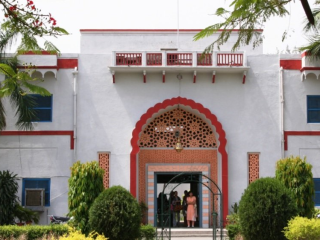
AMU Women’s College
AMU Women’s College is a constituent institution of Aligarh Muslim University in Aligarh, Uttar Pradesh, India. It provides higher education exclusively to women, emphasizing academic excellence, social awareness, and empowerment within the framework of the university’s historic commitment to modern education for Muslims in India. Key facts Founded: 1906 (as Girls’ School); became Women’s College in 1920 Affiliation: Aligarh Muslim University Location: Aligarh, Uttar Pradesh, India Principal: Prof. Naima Khatoon (as of 2023) Programs: Undergraduate and postgraduate degrees in arts, sciences, and social sciences Historical background The college traces its roots to the establishment of a girls’ school by Sheikh Abdullah, a noted social reformer and educationist, and his wife Waheed Jahan Begum. It evolved into a degree college in 1920 when Aligarh Muslim University was founded. The institution was conceived to advance Muslim women’s education during a time when female literacy in India was low. Academic and campus life AMU Women’s College offers programs in humanities, social sciences, natural sciences, and professional disciplines. The campus includes hostels, libraries, and cultural societies designed to foster intellectual and personal growth. It remains one of the few women’s colleges integrated within a major coeducational university in India, giving students access to AMU’s wider academic and research resources. Significance and impact The college has played a pivotal role in promoting women’s higher education in northern India and among Muslim communities. Its alumni have contributed to academia, civil services, law, and social reform. The institution continues to symbolize the progressive educational vision of its founders while adapting to contemporary academic standards and global educational trends.
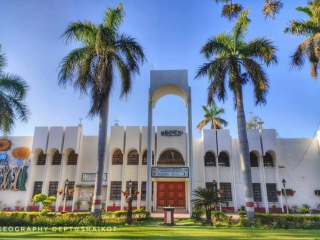
Aligarh Muslim University
Aligarh Muslim University (AMU) is a central public university located in Aligarh, Uttar Pradesh, India. Established in 1920, it evolved from the earlier Muhammadan Anglo-Oriental College founded by Sir Syed Ahmad Khan in 1875. AMU has long been a leading center for higher learning in India, emphasizing modern education among the Muslim community and promoting inclusive academic excellence. Key facts Founded: 1920 Founder: Sir Syed Ahmad Khan Location: Aligarh, Uttar Pradesh, India Type: Central University Motto: “Taught man what he knew not” Historical background The university originated as the Muhammadan Anglo-Oriental College, modeled after British universities such as University of Cambridge. Its transformation into Aligarh Muslim University in 1920 marked the institutional culmination of the Aligarh Movement—a reformist effort to integrate modern Western education with Islamic values. The campus architecture and academic model continue to reflect this synthesis. Academic structure and programs AMU offers more than 300 programs through faculties of sciences, social sciences, engineering, law, medicine, and theology. It also operates several off-campus centers across India. The university’s schools, including Zakir Husain College of Engineering and Technology and Jawaharlal Nehru Medical College, Aligarh, are well recognized for professional education and research. Cultural and intellectual significance The institution has been a crucible for political, literary, and scientific thought in South Asia. Its alumni include national leaders, jurists, scientists, and artists who contributed significantly to India’s independence and postcolonial development. AMU remains emblematic of educational reform and secularism within India’s pluralistic society. Campus and legacy Spread over more than 450 hectares, the AMU campus features distinctive Indo-Islamic architecture, centered around the iconic Bab-e-Syed Gate and Maulana Azad Library. The university’s traditions—such as its residential system, student unions, and literary societies—continue to uphold the reformist vision of its founder.