
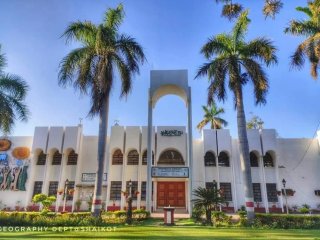
Aligarh Muslim University Campus
The Aligarh Muslim University (AMU) Campus in Aligarh, Uttar Pradesh, India, is a prominent educational and cultural landmark known for its expansive layout, Indo-Islamic architecture, and historical legacy. Established in 1875 by Sir Syed Ahmad Khan, the campus is central to one of India’s oldest and most prestigious universities. Key facts Founded: 1875 (as Muhammadan Anglo-Oriental College) Campus size: Over 1,150 acres Location: Aligarh, Uttar Pradesh, India Architectural style: Indo-Saracenic and colonial influences Landmarks: Maulana Azad Library, Strachey Hall, Kennedy Auditorium Layout and Architecture 4 The AMU campus is designed as a self-contained township featuring academic departments, residential halls, libraries, and sports complexes. Its layout reflects the educational ideals of the late 19th century, combining British planning concepts with Mughal architectural motifs. Iconic structures such as the Victoria Gate and Sir Syed Hall showcase domes, arches, and red-brick facades that harmonize tradition with modernity. Academic and Cultural Hub The campus hosts dozens of faculties and centers, serving students from across India and abroad. It houses the Maulana Azad Library, one of Asia’s largest university libraries, and several museums and research institutes. The campus culture is deeply rooted in diversity, blending scholarly pursuit with rich traditions of debate, literature, and social reform. Student Life and Facilities AMU’s residential system includes over a dozen halls, each with its own history and student societies. Facilities such as the Kennedy Auditorium, sports grounds, and health services make the campus a vibrant community. Annual cultural and literary events like the Sir Syed Day celebrations highlight its living heritage and educational mission. Significance The AMU Campus stands as a symbol of educational modernization among India’s Muslim community and a model of pluralistic higher learning. Its influence extends beyond academics into India’s social and political history, shaping generations of intellectuals and public figures.
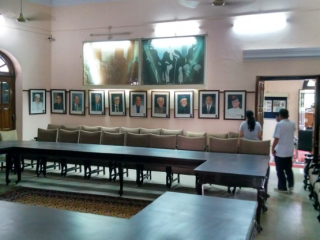
Sir Syed Academy Museum
The Sir Syed Academy Museum is a cultural and historical museum located within the campus of Aligarh Muslim University (AMU) in Aligarh, India. It is part of the Sir Syed Academy, dedicated to preserving and promoting the legacy of Sir Syed Ahmad Khan—the 19th-century reformer, educator, and founder of the Aligarh Movement. Key facts Location: AMU campus, Aligarh, Uttar Pradesh, India Established: 1988 (Sir Syed Academy); museum later expanded Affiliation: Sir Syed Academy, Aligarh Muslim University Focus: Life and works of Sir Syed Ahmad Khan and the Aligarh Movement Type: Biographical and heritage museum Historical background The museum was created as part of AMU’s Sir Syed Academy to archive documents, photographs, and memorabilia connected to Sir Syed Ahmad Khan. It reflects his pioneering role in modern education and social reform among Indian Muslims during British India, especially through the founding of the Muhammadan Anglo-Oriental College in 1875. Collections and exhibits The museum houses rare manuscripts, personal belongings of Sir Syed Ahmad Khan, original letters, portraits, and early editions of his writings. Exhibits also trace the development of the Aligarh Movement and the evolution of the university. Visual displays and curated timelines illustrate his intellectual and educational contributions. Educational and cultural significance Beyond being a repository of artifacts, the Sir Syed Academy Museum functions as a research and cultural hub. Scholars, students, and visitors use it to study India’s educational reform history. It supports lectures, publications, and outreach programs that emphasize Sir Syed’s progressive ideas on science, rationalism, and interfaith understanding. Architecture and setting Situated within the AMU heritage zone, the museum’s architecture harmonizes with the Indo-Islamic style of the surrounding campus buildings. The design evokes 19th-century Aligarh’s scholarly atmosphere, reinforcing the continuity between the university’s past and its academic mission today.
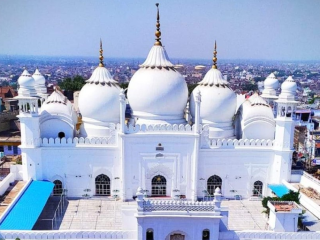
Aligarh Jama Masjid
The Aligarh Jama Masjid, also known as Jama Masjid Aligarh, is a historic congregational mosque situated in the Upper Kot area of Aligarh, Uttar Pradesh, India. Built in the early 18th century, it stands as one of the city’s oldest and most significant Islamic monuments, serving as a prominent center of worship and cultural heritage. Key facts Location: Upper Kot, Aligarh, Uttar Pradesh, India Built by: Sabit Khan, governor under Mughal Emperor Farrukhsiyar Completed: Around 1718 CE Architectural style: Indo-Islamic, Mughal Capacity: Accommodates several thousand worshippers Historical background Constructed during the Mughal period, the mosque was commissioned by Sabit Khan, who served as the governor of Aligarh (then known as Kol) under Emperor Farrukhsiyar. Its establishment reflected the Mughal emphasis on monumental religious architecture and Aligarh’s growing prominence as a regional administrative and military center. Architecture and layout 4 The Aligarh Jama Masjid features characteristic Mughal architectural elements, including multiple domes, tall minarets, and an expansive courtyard. Its prayer hall is supported by intricately designed arches and columns, while the central dome dominates the skyline of the surrounding fort area. The mosque’s elevated location on the Upper Kot hill gives it both defensive and symbolic significance. Religious and cultural importance The mosque continues to function as an active place of worship, hosting daily prayers and major congregations during festivals like Eid. It remains an emblem of Aligarh’s Islamic architectural legacy and community life, often visited by scholars, students, and tourists exploring the city’s historical landmarks. Conservation status While still structurally sound, the mosque faces challenges typical of centuries-old monuments, including environmental wear and limited restoration efforts. Local and heritage authorities have occasionally undertaken preservation initiatives to maintain its historical integrity and architectural features.

Achal Taal Lake
Achal Taal Lake is a historic water body and religious site located in the city of Aligarh, in the Indian state of Uttar Pradesh. The lake is part of the Achalgarh temple complex, an important pilgrimage center associated with local legends and the worship of Lord Shiva. Key facts Location: Aligarh, Uttar Pradesh, India Primary deity: Lord Shiva (Achaleshwar Mahadev Temple) Religious significance: Linked to ancient Hindu mythology Type: Natural-cum-man-made lake with temple structures Nearby landmarks: Aligarh Fort, University of Aligarh Muslim University Historical background Achal Taal is traditionally regarded as an ancient sacred site. According to local lore, it was once the location of a temple dedicated to Achaleshwar Mahadev, a manifestation of Lord Shiva. The site’s antiquity and mythological connections have made it a center of devotion for centuries, attracting pilgrims especially during Hindu festivals such as Mahashivratri. Physical and cultural features The lake is surrounded by historic temple ruins, ghats, and shrines, giving it both religious and architectural importance. Though once a thriving water body, parts of it have suffered from neglect and encroachment. Restoration efforts by local authorities and heritage groups occasionally aim to preserve its cultural value and improve water quality. Religious importance Achal Taal’s sanctity arises from its association with Shiva worship. Pilgrims perform ritual baths and offer prayers at the adjacent Achaleshwar Mahadev Temple, believing that the lake’s waters possess purifying properties. This blend of mythic reverence and natural beauty makes Achal Taal a notable spiritual and cultural landmark in Aligarh.
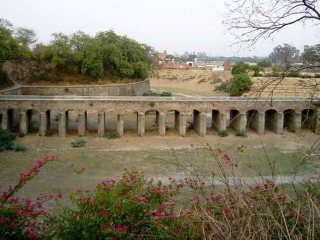
Aligarh Fort
Aligarh Fort is a historic stronghold located in Aligarh, Uttar Pradesh, India. It is known for its strategic design and association with several major events in North Indian history, particularly during the Mughal and British colonial periods. Key facts Location: Aligarh, Uttar Pradesh, India Constructed by: Sabit Khan, governor under Mughal Emperor Farrukhsiyar Construction period: Early 18th century (around 1724–1725) Architecture style: Mughal military architecture Current use: Historical monument and tourist site Historical background The fort was commissioned by Sabit Khan, the Mughal governor of Kol (present-day Aligarh), in the early 18th century. Built over an earlier fortification, it was designed to serve both as a defensive structure and as a seat of local governance. Its construction marked the consolidation of Mughal influence in the region. Architecture and layout Aligarh Fort features a roughly triangular plan with massive bastions, thick ramparts, and a surrounding moat. The fort is known for its strong gates and bastioned walls made of stone and brick. Within the complex are remnants of Mughal-era buildings and later additions from British control, showcasing a blend of architectural influences over time. Role in colonial history The fort gained prominence during the early stages of British expansion in India. It was captured by British forces under General Gerard Lake in 1803 during the Second Anglo-Maratha War. The battle for Aligarh Fort was a decisive event that helped secure British control over the region of Doab. Present condition and significance Today, Aligarh Fort stands as an important archaeological and tourist site. Though much of its interior structures have deteriorated, the outer walls, bastions, and gateways remain impressive examples of early modern Indian military architecture. The site attracts historians and visitors interested in Mughal and colonial-era fortifications.