
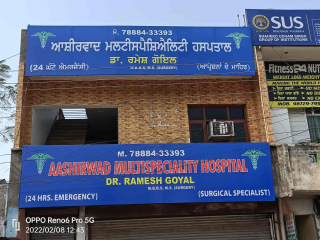
Aashirwad Multispeciality Hospital
Aashirwad Multispeciality Hospital is a private healthcare facility in Aligarh, Uttar Pradesh, known for providing comprehensive diagnostic, medical, and surgical services. It emphasizes orthopedic, pulmonary, and emergency care, serving patients across Sudhama Puri and neighboring areas with 24-hour operations and modern infrastructure. Medical Services The hospital offers a range of specialties including orthopedics and joint replacement, pulmonology and chest medicine, general and laparoscopic surgery, critical and trauma care, and internal medicine. Diagnostic services such as X-ray, bronchoscopy, and pathology testing are available alongside physiotherapy and nursing care. Medical Team Aashirwad Multispeciality Hospital’s senior consultants include Dr. Chandan Singh (Orthopedics, Joint Replacement) and Dr. Arushi Singh (Pulmonary Medicine). Both bring advanced international training and experience from major Indian institutions such as AIIMS New Delhi and Jawaharlal Nehru Medical College (AMU). Their multidisciplinary team covers orthopedics, respiratory diseases, cardiology, and general medicine. Facilities and Technology The facility integrates advanced imaging and surgical technology, intensive care units, and emergency response support. It also organizes community health programs such as free consultation camps offering discounted diagnostic tests and specialty consultations, reflecting a focus on accessibility and preventive care. Reputation and Community Response Since its establishment in 2024, the hospital has earned high local ratings—around 4.6 to 4.7 stars on Justdial—for cleanliness, affordability, and compassionate care. Patients frequently cite attentive staff and effective treatments in reviews, reinforcing its position as one of Aligarh’s trusted centers for multidisciplinary healthcare.

K K Hospital
K K Hospital, also known as K K Hospital & Heart Centre, is a multispecialty healthcare institution located on Ramghat Road in Aligarh, Uttar Pradesh. It is NABH-accredited and recognized for offering round-the-clock emergency and intensive care services along with a comprehensive range of medical specialties. The hospital has earned a strong local reputation for cardiac and critical-care treatment. Medical Services and Specialties K K Hospital provides specialized departments in cardiology, pulmonology, nephrology, pediatrics, rheumatology, and obstetrics & gynecology. It combines advanced diagnostic and treatment facilities with multidisciplinary expertise led by physicians such as Dr. K. K. Varshney (senior cardiologist), Dr. Nitin Varshney, Dr. Sagar Varshney, and Dr. Aarti Varshney. Patient-centered care, quick emergency response, and accessibility for people with limited mobility are central features of the facility. Reputation and Patient Experience The hospital maintains a 4.7-star average from over 2,700 online ratings. Patients frequently commend the cooperative staff, clean environment, and effective cardiac and pediatric services. While reviews often highlight professional and compassionate care, some accounts note inconsistent communication during busy hours—typical feedback for large private hospitals. Facilities and Accreditation Accredited by India’s National Accreditation Board for Hospitals (NABH), K K Hospital offers 24-hour ICU availability, advanced diagnostic labs, and operating theaters equipped for both emergency and elective procedures. Its infrastructure supports wheelchair-accessible entrances and parking, underscoring a commitment to patient safety and inclusivity. Community Role Serving Aligarh for more than a decade, K K Hospital positions itself as both a tertiary-care provider and a community health resource. It promotes awareness programs and preventive health checkups, aligning clinical services with broader public-health goals.

Maxfort Multispeciality Hospital
Maxfort Multispeciality Hospital is a privately run healthcare facility in Aligarh, Uttar Pradesh, offering round-the-clock medical and surgical services. Established in 2014, it has become one of the city’s better-known private hospitals, recognized for pediatric and neonatal care as well as for its participation in national health insurance networks such as Ayushman Bharat – Pradhan Mantri Jan Arogya Yojana and Star Health Insurance . Background and Services Registered as a proprietorship and classified as a small enterprise, the hospital operates under the “human health activities” category, focusing on general hospital services . Its facilities include a neonatal intensive care unit (NICU), pediatric department, obstetrics and gynecology, orthopedics, general medicine, and emergency services. It also provides specialized treatments for viral fevers, critical illnesses, and surgical cases . Role in Public Health Schemes Maxfort Multispeciality Hospital is empanelled under the Ayushman Bharat–PM-JAY program, enabling cashless treatment for eligible patients up to ₹5 lakh per family per year. The hospital maintains an Ayushman Mitra help desk to assist with verification and admissions. Its association with national schemes makes it an accessible choice for residents across Aligarh and neighboring districts such as Hathras and Mathura . Reputation and Patient Feedback Online listings and independent reviews show a mixed public perception. The hospital maintains an average rating of about 4.4 out of 5 from more than a thousand reviewers on Justdial. Many patients commend the pediatric specialists and cleanliness, while others cite issues with pricing, staff attentiveness, and transparency in billing . Standing in the Local Healthcare Landscape Frequently featured among Aligarh’s top private hospitals, Maxfort Multispeciality Hospital is noted for combining pediatric expertise with multi-disciplinary services. Its location on Ramghat Road near KK Heart Hospital makes it easily reachable from major parts of the city
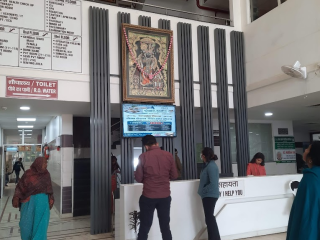
Shekhar Sarraf Memorial Hospital
Shekhar Sarraf Memorial Hospital (SSMH) is a multi-specialty healthcare institution in Aligarh, Uttar Pradesh, operating under the company Shekhar Sarraf Memorial Hospital Private Limited. Established in 2009, it provides comprehensive medical and surgical care with a mission to deliver affordable, quality healthcare to both urban and rural populations. Background and Structure The hospital functions as a 120–198-bed, centrally air-conditioned facility equipped with modern diagnostic and therapeutic technologies. It was initially promoted by experienced medical professionals of Aligarh District and later managed by the Shekhar Group. The institution operates on a “no profit, no loss” philosophy in memory of Shri Chandra Shekhar Sarraf, emphasizing patient welfare over commercial motives. Specialties and Services SSMH provides multidisciplinary services, including cardiology, gastroenterology, neurosurgery, orthopedics, obstetrics and gynecology, pediatrics, and emergency trauma care. It is notable for its advanced gastroenterology unit offering double-balloon enteroscopy and for maintaining a 24/7 emergency department staffed with trained personnel. The hospital also operates a licensed blood bank and intensive care facilities. Ayushman Bharat Empanelment The hospital is officially empanelled under the Ayushman Bharat – Pradhan Mantri Jan Arogya Yojana (PM-JAY), enabling cashless treatment for eligible patients. Coverage extends up to INR 5 lakh per family annually for a wide range of specialties. Its inclusion in the scheme underscores its role in expanding equitable healthcare access within the Aligarh region. Corporate and Financial Overview Registered under CIN U85110UP2009PTC036873, Shekhar Sarraf Memorial Hospital Private Limited remains an active, unlisted company headquartered on Agra Road, Aligarh. It has an authorized capital of ₹1 crore and a paid-up capital of ₹9.5 million. Recent filings indicate steady revenue growth exceeding 18 % year-over-year and expanding profitability, with leadership by directors Akansha Gupta and Sumit Kumar. Public Reception Online reviews reflect a generally positive community perception, highlighting attentive staff, affordability, and competent doctors, though cleanliness and management efficiency are occasional concerns. The facility averages a 4.5-star rating across review platforms, establishing it as a significant healthcare provider in Aligarh.
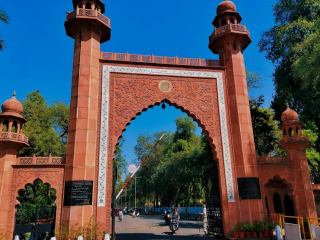
AMU Cultural Festival
The AMU Cultural Festival is the flagship intercollegiate cultural and sports event of Aligarh Muslim University (AMU), held annually in Aligarh, India. It brings together students from across India to compete and collaborate in athletics, performing arts, and literary activities, celebrating diversity and campus spirit. Key facts Host: Aligarh Muslim University Location: Aligarh, Uttar Pradesh, India Frequency: Annual (typically in spring) Participants: Students from Indian universities and colleges Events: Sports, music, drama, debate, fine arts, and cultural showcases Origins and Purpose The AMU Cultural Festival was established to promote cultural exchange, sportsmanship, and creative expression among youth. Rooted in AMU’s long-standing academic and social traditions, it provides a national platform for showcasing student talent beyond the classroom through both competitive and collaborative events. Sports and Competitions Sports form a major part of the festival, featuring athletics, football, basketball, cricket, and indoor games. Participants represent various faculties and external institutions, fostering teamwork and healthy rivalry. Winners often gain recognition at inter-university and national sports circuits. Cultural and Literary Programs 5 Alongside sports, the festival hosts music and dance performances, stage plays, debates, poetry recitations (mushaira), and art exhibitions. These events highlight AMU’s inclusive ethos and linguistic diversity, with programs often in Urdu, Hindi, and English. Impact and Legacy The festival has grown into a significant cultural and sporting tradition within North India’s university circuit. It strengthens student identity and community engagement while preserving AMU’s heritage of intellectual and artistic excellence. Each edition reflects evolving youth culture while maintaining the university’s historical values of unity and excellence.
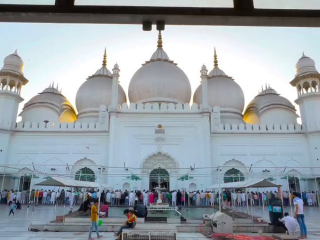
Eid-ul-Fitr celebrations
Eid-ul-Fitr celebrations in Aligarh, Uttar Pradesh, mark the joyful conclusion of the Islamic holy month of Ramadan. The event gathers the city’s Muslim community for mass prayers, feasts, and community activities, blending religious devotion with local cultural expression. Key facts Location: Aligarh, Uttar Pradesh, India Timing: 1st day of Shawwal, following the Ramadan moon sighting Major venue: Eidgah and Jama Masjid, Aligarh Duration: 1–3 days Core practices: Eid namaz, charity (Zakat al-Fitr), family feasts Religious and social observances The day begins with special congregational prayers at the Aligarh Eidgah, drawing thousands of worshippers. Before the prayer, participants give Zakat al-Fitr, a form of almsgiving that ensures all Muslims can join the festivities. Sermons emphasize gratitude, compassion, and community unity, followed by greetings of “Eid Mubarak.” Cultural and culinary traditions 5 Families prepare elaborate meals featuring traditional dishes such as sevaiyan (sweet vermicelli), biryani, kebabs, and sheer khurma. Homes are decorated, children receive gifts or “Eidi,” and people visit friends and relatives. Markets and streets near the city center become vibrant with food stalls, clothing shops, and lights. Community engagement Beyond personal celebrations, Aligarh’s Eid-ul-Fitr has a strong communal dimension. Local organizations and mosques arrange iftar and Eid meals for the underprivileged. The festive spirit extends across religious boundaries, with non-Muslim neighbors often participating in the exchange of sweets and greetings. Civic and cultural significance Eid-ul-Fitr in Aligarh reflects the city’s long-standing traditions of pluralism and hospitality. The celebration reinforces social bonds and contributes to the cultural rhythm of Uttar Pradesh, showcasing how faith and festivity coexist in one of India’s historic university towns.
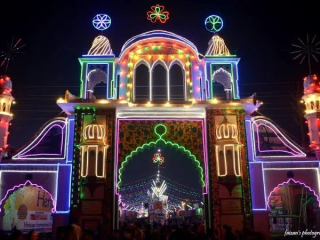
Aligarh Annual Exhibition
The Aligarh Annual Exhibition, also known locally as Numaish, is a major cultural and sports event held every year in Aligarh, Uttar Pradesh, India. Established in the early 20th century, it combines trade, entertainment, and athletic competitions, drawing large crowds from across the region. Key facts Location: Exhibition Ground, Aligarh, Uttar Pradesh Founded: 1920s Frequency: Annual (January–March) Features: Trade stalls, sports events, cultural performances Organizer: Aligarh Exhibition Committee Origins and Evolution The exhibition began as a modest industrial and agricultural fair to promote local trade and craftsmanship. Over time, it evolved into a large-scale event showcasing regional industries, educational institutions, and recreational activities. Sports and games gradually became integral, promoting youth participation and community engagement. Sports and Athletic Activities While primarily a trade and cultural fair, the Aligarh Annual Exhibition hosts numerous sports competitions. Events include athletics, traditional games, kabaddi, wrestling, and sometimes cricket matches, attracting local clubs and schools. The inclusion of sports fosters local talent and strengthens community ties. Cultural and Economic Significance The exhibition functions as a social and economic hub for Aligarh and nearby districts. Alongside sports, it features cultural performances, amusement rides, and food stalls. It boosts local business activity and serves as a platform for artisans and small enterprises to showcase their work. Present-Day Status Today, the Aligarh Annual Exhibition remains one of North India’s prominent regional fairs. It continues to integrate entertainment, culture, and sports, maintaining its legacy as a symbol of Aligarh’s social vibrancy and communal spirit.
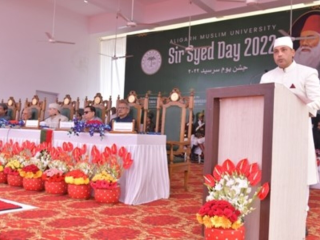
AMU Sir Syed Day
Sir Syed Day at Aligarh Muslim University (AMU) is an annual commemorative event held in honor of Sir Syed Ahmad Khan, the university’s founder and a leading 19th-century reformer. Marked every October 17, it celebrates his birth anniversary with ceremonies, sports, and cultural programs across AMU’s campus in Aligarh, Uttar Pradesh. Key facts Date: October 17 (annual) Venue: Aligarh Muslim University, Uttar Pradesh, India Named after: Sir Syed Ahmad Khan (1817–1898) Founded: Observed since early 20th century Activities: Sports meets, academic sessions, cultural and literary events Historical significance Sir Syed Ahmad Khan founded the Mohammedan Anglo-Oriental College in 1875, which later became AMU. Sir Syed Day preserves his legacy of modern education for Indian Muslims and his advocacy for scientific and rational learning. The commemoration highlights AMU’s historical mission as a center of intellectual and social reform. Sports and celebrations Sports events form a major part of the Sir Syed Day observance. The university organizes inter-hall and inter-faculty tournaments in cricket, football, hockey, and athletics, culminating in prize distributions and parades at the AMU Athletics Ground. These competitions foster campus unity and pay tribute to Sir Syed’s emphasis on holistic education. Cultural and academic programs The celebration includes essay contests, debates, lectures, and exhibitions on Sir Syed’s life and vision. University departments host seminars exploring his role in modern Indian education and reform movements. The main ceremony features speeches by AMU’s Vice-Chancellor and guests, wreath-laying at Sir Syed’s tomb within the campus, and illumination of university buildings.
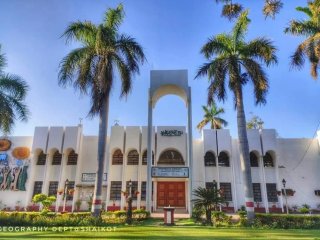
Aligarh Muslim University Campus
The Aligarh Muslim University (AMU) Campus in Aligarh, Uttar Pradesh, India, is a prominent educational and cultural landmark known for its expansive layout, Indo-Islamic architecture, and historical legacy. Established in 1875 by Sir Syed Ahmad Khan, the campus is central to one of India’s oldest and most prestigious universities. Key facts Founded: 1875 (as Muhammadan Anglo-Oriental College) Campus size: Over 1,150 acres Location: Aligarh, Uttar Pradesh, India Architectural style: Indo-Saracenic and colonial influences Landmarks: Maulana Azad Library, Strachey Hall, Kennedy Auditorium Layout and Architecture 4 The AMU campus is designed as a self-contained township featuring academic departments, residential halls, libraries, and sports complexes. Its layout reflects the educational ideals of the late 19th century, combining British planning concepts with Mughal architectural motifs. Iconic structures such as the Victoria Gate and Sir Syed Hall showcase domes, arches, and red-brick facades that harmonize tradition with modernity. Academic and Cultural Hub The campus hosts dozens of faculties and centers, serving students from across India and abroad. It houses the Maulana Azad Library, one of Asia’s largest university libraries, and several museums and research institutes. The campus culture is deeply rooted in diversity, blending scholarly pursuit with rich traditions of debate, literature, and social reform. Student Life and Facilities AMU’s residential system includes over a dozen halls, each with its own history and student societies. Facilities such as the Kennedy Auditorium, sports grounds, and health services make the campus a vibrant community. Annual cultural and literary events like the Sir Syed Day celebrations highlight its living heritage and educational mission. Significance The AMU Campus stands as a symbol of educational modernization among India’s Muslim community and a model of pluralistic higher learning. Its influence extends beyond academics into India’s social and political history, shaping generations of intellectuals and public figures.
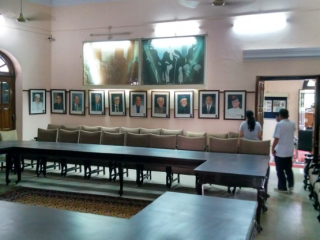
Sir Syed Academy Museum
The Sir Syed Academy Museum is a cultural and historical museum located within the campus of Aligarh Muslim University (AMU) in Aligarh, India. It is part of the Sir Syed Academy, dedicated to preserving and promoting the legacy of Sir Syed Ahmad Khan—the 19th-century reformer, educator, and founder of the Aligarh Movement. Key facts Location: AMU campus, Aligarh, Uttar Pradesh, India Established: 1988 (Sir Syed Academy); museum later expanded Affiliation: Sir Syed Academy, Aligarh Muslim University Focus: Life and works of Sir Syed Ahmad Khan and the Aligarh Movement Type: Biographical and heritage museum Historical background The museum was created as part of AMU’s Sir Syed Academy to archive documents, photographs, and memorabilia connected to Sir Syed Ahmad Khan. It reflects his pioneering role in modern education and social reform among Indian Muslims during British India, especially through the founding of the Muhammadan Anglo-Oriental College in 1875. Collections and exhibits The museum houses rare manuscripts, personal belongings of Sir Syed Ahmad Khan, original letters, portraits, and early editions of his writings. Exhibits also trace the development of the Aligarh Movement and the evolution of the university. Visual displays and curated timelines illustrate his intellectual and educational contributions. Educational and cultural significance Beyond being a repository of artifacts, the Sir Syed Academy Museum functions as a research and cultural hub. Scholars, students, and visitors use it to study India’s educational reform history. It supports lectures, publications, and outreach programs that emphasize Sir Syed’s progressive ideas on science, rationalism, and interfaith understanding. Architecture and setting Situated within the AMU heritage zone, the museum’s architecture harmonizes with the Indo-Islamic style of the surrounding campus buildings. The design evokes 19th-century Aligarh’s scholarly atmosphere, reinforcing the continuity between the university’s past and its academic mission today.