
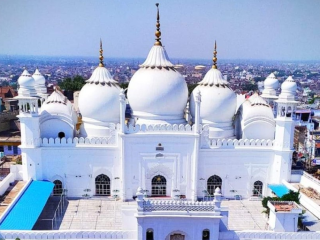
Aligarh Jama Masjid
The Aligarh Jama Masjid, also known as Jama Masjid Aligarh, is a historic congregational mosque situated in the Upper Kot area of Aligarh, Uttar Pradesh, India. Built in the early 18th century, it stands as one of the city’s oldest and most significant Islamic monuments, serving as a prominent center of worship and cultural heritage. Key facts Location: Upper Kot, Aligarh, Uttar Pradesh, India Built by: Sabit Khan, governor under Mughal Emperor Farrukhsiyar Completed: Around 1718 CE Architectural style: Indo-Islamic, Mughal Capacity: Accommodates several thousand worshippers Historical background Constructed during the Mughal period, the mosque was commissioned by Sabit Khan, who served as the governor of Aligarh (then known as Kol) under Emperor Farrukhsiyar. Its establishment reflected the Mughal emphasis on monumental religious architecture and Aligarh’s growing prominence as a regional administrative and military center. Architecture and layout 4 The Aligarh Jama Masjid features characteristic Mughal architectural elements, including multiple domes, tall minarets, and an expansive courtyard. Its prayer hall is supported by intricately designed arches and columns, while the central dome dominates the skyline of the surrounding fort area. The mosque’s elevated location on the Upper Kot hill gives it both defensive and symbolic significance. Religious and cultural importance The mosque continues to function as an active place of worship, hosting daily prayers and major congregations during festivals like Eid. It remains an emblem of Aligarh’s Islamic architectural legacy and community life, often visited by scholars, students, and tourists exploring the city’s historical landmarks. Conservation status While still structurally sound, the mosque faces challenges typical of centuries-old monuments, including environmental wear and limited restoration efforts. Local and heritage authorities have occasionally undertaken preservation initiatives to maintain its historical integrity and architectural features.
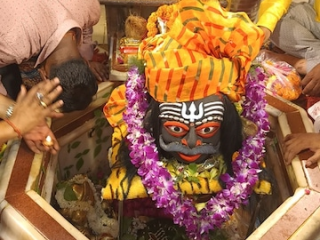
Achal Taal Lake
Achal Taal Lake is a historic water body and religious site located in the city of Aligarh, in the Indian state of Uttar Pradesh. The lake is part of the Achalgarh temple complex, an important pilgrimage center associated with local legends and the worship of Lord Shiva. Key facts Location: Aligarh, Uttar Pradesh, India Primary deity: Lord Shiva (Achaleshwar Mahadev Temple) Religious significance: Linked to ancient Hindu mythology Type: Natural-cum-man-made lake with temple structures Nearby landmarks: Aligarh Fort, University of Aligarh Muslim University Historical background Achal Taal is traditionally regarded as an ancient sacred site. According to local lore, it was once the location of a temple dedicated to Achaleshwar Mahadev, a manifestation of Lord Shiva. The site’s antiquity and mythological connections have made it a center of devotion for centuries, attracting pilgrims especially during Hindu festivals such as Mahashivratri. Physical and cultural features The lake is surrounded by historic temple ruins, ghats, and shrines, giving it both religious and architectural importance. Though once a thriving water body, parts of it have suffered from neglect and encroachment. Restoration efforts by local authorities and heritage groups occasionally aim to preserve its cultural value and improve water quality. Religious importance Achal Taal’s sanctity arises from its association with Shiva worship. Pilgrims perform ritual baths and offer prayers at the adjacent Achaleshwar Mahadev Temple, believing that the lake’s waters possess purifying properties. This blend of mythic reverence and natural beauty makes Achal Taal a notable spiritual and cultural landmark in Aligarh.
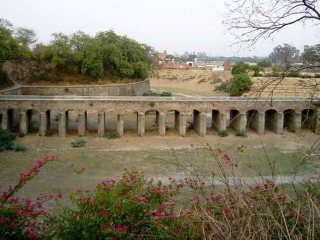
Aligarh Fort
Aligarh Fort is a historic stronghold located in Aligarh, Uttar Pradesh, India. It is known for its strategic design and association with several major events in North Indian history, particularly during the Mughal and British colonial periods. Key facts Location: Aligarh, Uttar Pradesh, India Constructed by: Sabit Khan, governor under Mughal Emperor Farrukhsiyar Construction period: Early 18th century (around 1724–1725) Architecture style: Mughal military architecture Current use: Historical monument and tourist site Historical background The fort was commissioned by Sabit Khan, the Mughal governor of Kol (present-day Aligarh), in the early 18th century. Built over an earlier fortification, it was designed to serve both as a defensive structure and as a seat of local governance. Its construction marked the consolidation of Mughal influence in the region. Architecture and layout Aligarh Fort features a roughly triangular plan with massive bastions, thick ramparts, and a surrounding moat. The fort is known for its strong gates and bastioned walls made of stone and brick. Within the complex are remnants of Mughal-era buildings and later additions from British control, showcasing a blend of architectural influences over time. Role in colonial history The fort gained prominence during the early stages of British expansion in India. It was captured by British forces under General Gerard Lake in 1803 during the Second Anglo-Maratha War. The battle for Aligarh Fort was a decisive event that helped secure British control over the region of Doab. Present condition and significance Today, Aligarh Fort stands as an important archaeological and tourist site. Though much of its interior structures have deteriorated, the outer walls, bastions, and gateways remain impressive examples of early modern Indian military architecture. The site attracts historians and visitors interested in Mughal and colonial-era fortifications.

AMU Riding Club & Sports Complex
The AMU Riding Club & Sports Complex is a major equestrian and athletic facility located within the campus of Aligarh Muslim University in Uttar Pradesh, India. It serves as both a training center for horse riding and a hub for multiple sports, reflecting the university’s long tradition of promoting physical education and competitive athletics. Key facts Location: AMU Campus, Aligarh, Uttar Pradesh, India Established: Early 20th century (riding club origins) Facilities: Horse stables, riding arena, sports grounds, and stadium Affiliation: Aligarh Muslim University (AMU) Notable for: One of India’s oldest university riding clubs History and legacy Founded during the early years of the university, the AMU Riding Club was inspired by British-era cavalry traditions and aimed to cultivate discipline and horsemanship among students. Over the decades, it became a cultural symbol of AMU’s heritage, producing skilled riders who competed at national equestrian events. The adjoining Sports Complex expanded to host athletics, football, cricket, and indoor games. Facilities and activities 4 The complex includes a large riding arena with well-maintained stables and paddocks, as well as multipurpose fields and tracks. Regular training programs, student riding lessons, and inter-university competitions are held here. The facility supports both recreational and professional sports under the guidance of the university’s Games Committee. Significance Beyond athletic pursuits, the Riding Club & Sports Complex represents AMU’s emphasis on all-round development. It is a landmark on the campus, frequently featured in university events and parades. Its blend of historic equestrian culture and modern sports infrastructure makes it a distinctive feature of Aligarh’s educational landscape.
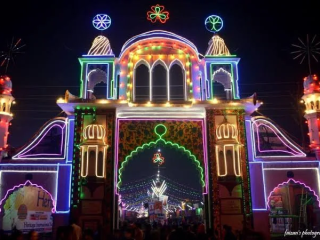
Aligarh Exhibition Ground
The Aligarh Exhibition Ground is a major public venue and fairground located in Aligarh, Uttar Pradesh, India. It is best known for hosting the annual Numaish, one of North India’s oldest and most prominent cultural and commercial fairs, attracting visitors from across the region. Key facts Location: Aligarh, Uttar Pradesh, India Primary event: Numaish (Aligarh Exhibition) Inaugural year of fair: 1922 Main uses: Trade fairs, cultural shows, exhibitions Ownership/management: Local municipal and exhibition committee History and Cultural Significance Established in the early 20th century, the Aligarh Exhibition Ground rose to prominence with the launch of the Numaish exhibition in 1922. Initially a small industrial and agricultural display, it evolved into a large-scale fair showcasing regional crafts, businesses, and cultural programs. The event became a cornerstone of Aligarh’s civic identity and social calendar. Facilities and Layout 4 The ground comprises expansive open areas for stalls and amusement rides, performance stages, and pavilions for government departments and private enterprises. Temporary infrastructures are set up each year during the Numaish season, while the area remains a multipurpose venue for public gatherings, political rallies, and local festivals at other times. Economic and Social Impact The exhibition significantly boosts local commerce and tourism, drawing artisans, traders, and entrepreneurs from across Uttar Pradesh. It also functions as a social gathering point, fostering cultural exchange through music, theater, and cuisine. For many residents, the Numaish at the Aligarh Exhibition Ground remains a cherished tradition linking the city’s heritage with modern community life.
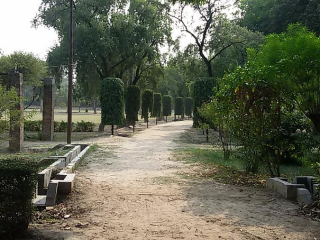
Company Bagh Aligarh
Company Bagh is a historic public garden and leisure park located in Aligarh, Uttar Pradesh, India. Established during the British colonial period, it serves as one of the city’s oldest and most recognizable green spaces, blending heritage, recreation, and community life for local residents. Key facts Location: Center of Aligarh, Uttar Pradesh, India Established: Late 19th century (colonial era) Type: Public garden and recreation park Managed by: Aligarh Municipal Corporation Accessibility: Open daily to the public Historical background Company Bagh, also known locally as “Company Garden,” was created during the British Raj as a landscaped public park. The “Company” name refers to the British East India Company era, when such civic gardens were developed for recreation and urban greenery. It has since evolved into a cultural landmark of Aligarh. Layout and features 4 The park covers several acres, with tree-lined walkways, ornamental flowerbeds, fountains, and open lawns. It includes seating areas, children’s play zones, and a central pond. Seasonal flower shows and local events are occasionally organized, drawing families and students from nearby institutions such as Aligarh Muslim University. Cultural and civic role Beyond recreation, Company Bagh functions as an important social gathering space and green lung for Aligarh. Morning walkers, yoga groups, and student circles frequent the park daily. Its colonial-era layout and enduring community use make it a notable example of historical urban landscaping adapted for contemporary civic life.

Centre Point Cinema
Most popular multiplex cinema in Aligarh Located inside Centre Point Mall Shows latest Bollywood and regional movies Major youth entertainment hub
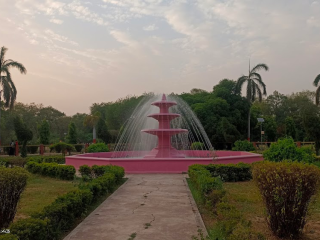
Nehru Park Aligarh
Nehru Park in Aligarh, Uttar Pradesh, India, is a popular urban green space named after India’s first Prime Minister, Jawaharlal Nehru. Located near the city’s central areas, it serves as a major recreational and community hub for residents and visitors alike, offering landscaped gardens and family-friendly facilities. Key facts Location: Center of Aligarh, Uttar Pradesh, India Named for: Jawaharlal Nehru Primary features: Gardens, walking paths, children’s play area Function: Public park and recreation ground Managed by: Aligarh Municipal Corporation History and setting Nehru Park was established to provide a public leisure space for Aligarh’s growing population in the post-independence era. Its naming reflects the civic trend of honoring national leaders who shaped modern India. The park’s placement within easy reach of commercial and residential neighborhoods makes it a daily destination for local walkers, students, and families. Layout and features The park is characterized by tree-lined pathways, manicured lawns, seasonal flowerbeds, and shaded seating. It includes a dedicated play zone for children, open grounds for small gatherings, and a central statue of Jawaharlal Nehru, which acts as a landmark within the space. Regular maintenance and civic events help preserve its appeal as an accessible urban retreat. Role in community life Beyond recreation, Nehru Park hosts public celebrations, morning exercise groups, and cultural gatherings, contributing to Aligarh’s social vibrancy. It also functions as an important green buffer within the dense urban landscape, supporting small-scale biodiversity and providing respite from city traffic and heat. Accessibility The park is open daily to the public, with morning and evening hours seeing the most visitors. Its proximity to major roads and neighborhoods ensures easy access by foot, rickshaw, or private vehicle, reinforcing its status as one of Aligarh’s most frequented public spaces.
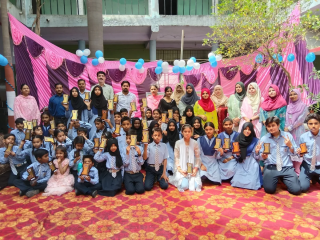
Aligarh city public school
City School Aligarh is a private educational institution located in Aligarh, Uttar Pradesh, India. It provides co-educational learning from pre-primary through senior secondary levels and is known for combining academic rigor with value-based education. The school serves as one of Aligarh’s notable English-medium schools emphasizing holistic student development. Key facts Location: Aligarh, Uttar Pradesh, India Affiliation: Central Board of Secondary Education (CBSE) Type: Private, co-educational school Grades: Nursery to Class XII Medium of instruction: English Academic approach City School Aligarh follows the CBSE curriculum, integrating modern teaching methodologies with traditional educational values. The school emphasizes conceptual understanding, problem-solving skills, and continuous assessment. Co-curricular programs are designed to develop leadership, communication, and teamwork among students. Facilities and campus The campus typically includes well-equipped science and computer laboratories, a library, sports grounds, and digital learning infrastructure. Facilities are intended to foster both academic and extracurricular excellence in a safe environment. Community and activities The school organizes annual events such as sports meets, cultural programs, and science exhibitions that encourage creativity and social responsibility. It also promotes environmental awareness and community engagement through student-led initiatives and outreach programs. Recognition and impact City School Aligarh has established a reputation within the region for strong board examination results and disciplined academic culture. Alumni often pursue higher education in prominent Indian universities, reflecting the school’s consistent academic quality and emphasis on moral education.
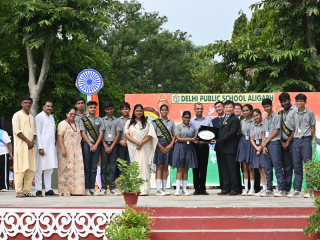
Delhi Public School
Delhi Public School Aligarh is a co-educational, English-medium school located in Aligarh, Uttar Pradesh, India. It operates under the Delhi Public School Society, one of India’s largest and most reputed networks of private schools, and offers education from the pre-primary to senior secondary levels. Key facts Affiliation: Central Board of Secondary Education (CBSE) Established: 1998 Managing body: Delhi Public School Society, New Delhi Campus location: Anupshehar Road, Aligarh, Uttar Pradesh Motto: “Service Before Self” Academics and Curriculum The school follows the CBSE curriculum, emphasizing a balanced blend of academics, co-curricular activities, and life-skill education. Core subjects include languages, sciences, social studies, and mathematics, while senior students can choose specialized streams such as Science, Commerce, or Humanities. DPS Aligarh also integrates technology-enabled learning through smart classrooms and laboratory facilities. Infrastructure and Facilities 5 The school’s campus is equipped with modern amenities, including science and computer laboratories, libraries, sports complexes, art and music rooms, and an auditorium for cultural programs. It provides transport and cafeteria services to ensure a convenient learning environment. Co-curricular and Student Life DPS Aligarh encourages holistic development through sports, performing arts, debates, and community outreach. Students regularly participate in inter-school competitions and social initiatives aligned with the DPS Society’s ethos of character building and civic responsibility. Administration and Affiliation The school functions under the supervision of the DPS Society and maintains academic and operational standards consistent with other DPS institutions across India. It aims to foster global citizenship values while maintaining strong academic performance at the CBSE board level.